Skip to main content
 MTD for Income Tax: penalties and how to avoid them

Making Tax Digital (MTD) for Income Tax means new rules for keeping digital business records, additional submissions to HMRC, and new deadlines to keep on top of. It also means a new set of HMRC penalties.
To recap on MTD for Income Tax: if you are a sole trader or landlord with qualifying income over £50,000, you will have to start using MTD for Income Tax from 6th April 2026. If your qualifying income is over £30,000, you must start on 6th April 2027. If your qualifying income is over £20,000, you will start from 6th April 2028.
Given the increased frequency of filing deadlines and additional paperwork with MTD for Income Tax, the prospect of racking up penalties is causing anxiety for a lot of people. Research carried out by Censuswide* on behalf of FreeAgent found 56% of people are “very” or “somewhat” worried about penalties under MTD for Income Tax.
Forewarned is forearmed, so this guide will take you through how the new system will work - and how you can avoid any fines.
Note: this information only applies to MTD for Income Tax - penalties for MTD for VAT and Self Assessment are separate.
What should I do so I don’t get a penalty?
Penalties will be issued for:
- missing a deadline to file quarterly updates
- late filing of final declarations
- late payment of income tax due
- failure to keep adequate records
If you can avoid these issues, you shouldn’t have to worry about MTD for Income Tax fines. But we know mistakes happen. This is how it will work, if you do have issues.
How will the new penalties work?
Under MTD for Income Tax, penalties for missed filing deadlines work on a points system - similar to penalty points in driving. One penalty point will be applied for each time you miss a filing deadline, whether that’s for your quarterly updates or your final declaration.
You will get a £200 fine if you rack up four points. If you keep missing your deadlines after that first fine, you will get an additional £200 for each late submission.
Note: You will only be hit with one penalty point per deadline, even if you have more than one income stream and are late filing for all of them.
The government has delayed introducing fines for MTD for Income Tax until April 2027. This means you won’t get points if you are late filing your quarterly updates in the 2026/27 tax year. However, you will still be required to keep digital records and all your quarterly updates must be submitted before you file your final declaration.
Is there any way to clear my penalty points once I’ve got them?
Yes. Your points will be reset to zero if you both:
- submit all outstanding quarterly updates and final declarations, and
- continue to submit your quarterly updates and final declaration on time for the next 12 months.
Will I be penalised for mistakes on quarterly updates?
There are no penalty points for making a mistake in a quarterly update. If you miss or forget something when filing a quarterly update, or need to change information after you’ve sent it to HMRC, you just need to correct the mistake in your software. Then the correct details for the year to date, including that quarter, will be updated with HMRC when you file your next quarterly update.
How about mistakes on my end-of-year update or final declaration?
Your end-of-year update and final declaration must be completely accurate or you could face a fine from HMRC. Fines for inaccuracy in your final declaration are based on several factors including: whether the mistake was a genuine slip-up, was made through carelessness or was deliberate; whether you told HMRC or they discovered it first; and whether there was an attempt to conceal the inaccuracy.
Mistakes on a final declaration can be corrected within 12 months of submission. If you have corrected a mistake before HMRC finds it (known as an ‘unprompted disclosure’) you could reduce your fine significantly. If you can show you took reasonable care to be accurate, but still made an error, it may be possible to avoid a fine altogether.
How will late payment penalties work under MTD for Income Tax?
From April 2026, taxpayers will face a new system of late payment penalties if they’re using MTD for Income Tax. If you don’t pay your tax on time, this is how HMRC will calculate the fine.
- If you are more than 15 days late paying your tax bill - you will be fined 3% of the amount you owe.
- If you still haven’t paid after 30 days - HMRC will add another 3% of the amount owed to your bill.
- If after 31 days, you still haven’t paid up - a penalty of 10% of the tax bill, accruing on a daily basis, will be added.
From April 2027 the fine increases from 3% to 4% of the amount due.
HMRC will also add interest to any unpaid tax, calculated at the Bank of England base rate plus 4%.
Note: In your first year of using MTD for Income Tax, you will have up to 30 days to make your payment, before the late payment penalties are applied. But be careful, this only applies in your first year!
What if I can’t pay on time?
If you are struggling to pay, you can make a ‘Time to Pay’ arrangement with HMRC, which will stop you getting more penalities added to your total, as long as you keep to the agreement. You will still have to pay interest on late payment - but the penalties will stop.
What happens if I don’t register for MTD for Income Tax with HMRC?
If you don’t register with HMRC to use MTD for Income Tax before 6th April, you can still sign up before your first quarterly update is due on 7th August.
Please note that, contrary to popular belief, setting up software alone does not enrol you into MTD for Income Tax, nor does being registered for old-style Self Assessment or even being registered for MTD for VAT. Registering for MTD for Income Tax is a completely separate process to any of these.
You will not be fined simply for failing to register. However, if you are legally required to use MTD for Income Tax and you fail to submit your quarterly updates and final submission, you will be fined according to the rules described above (so you will have to register to avoid those fines).
What happens if I don’t keep digital records?
If you do not use HMRC-recognised software - such as FreeAgent - to keep digital records of your income and expenditure, or if you fail to keep your records up to date, you could face a fine of up to £3,000.
FreeAgent can help you get MTD done - and avoid any nasty surprises
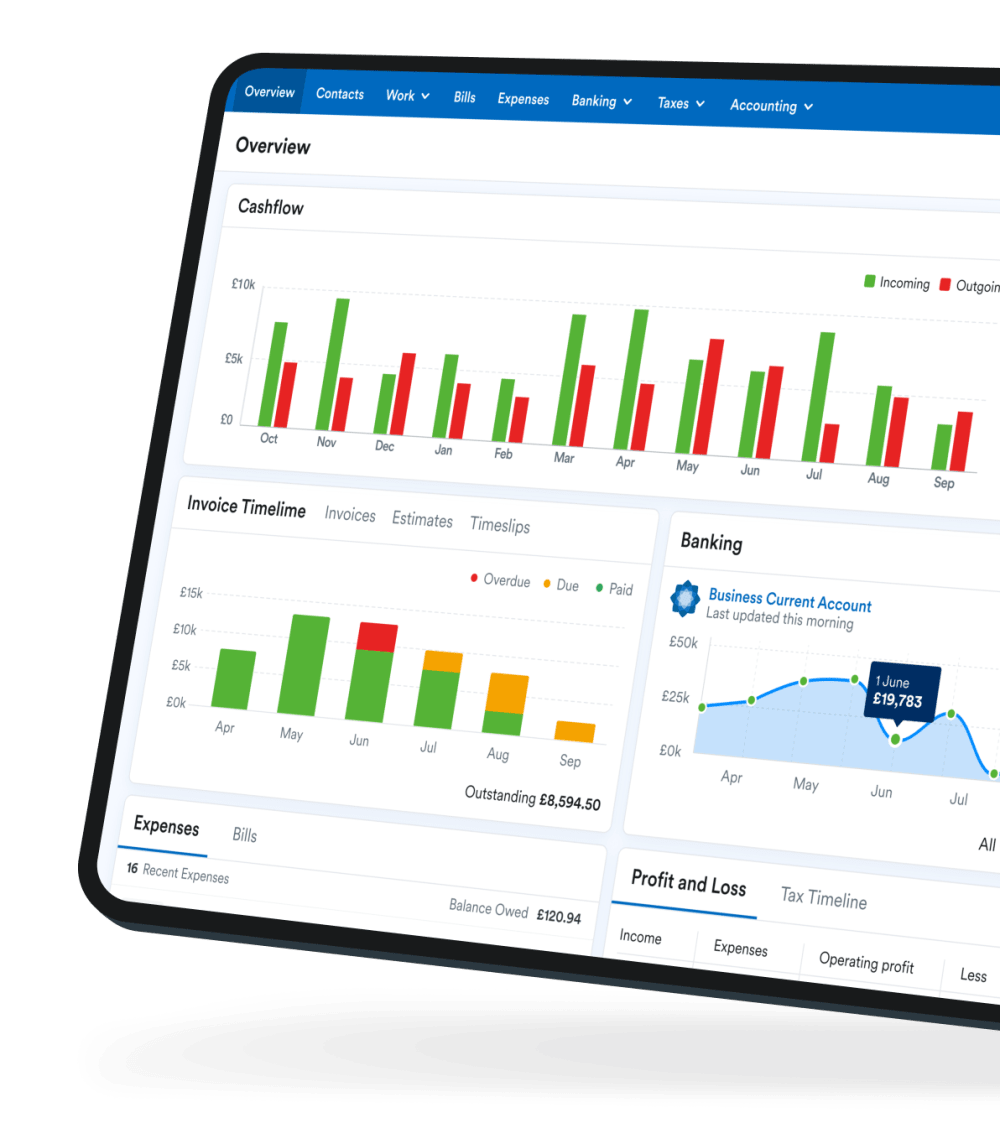
FreeAgent’s friendly, easy to use software is HMRC-recognised and can help you stay fully MTD-compliant. Plus we have lots of helpful guides, live and on-demand webinars, and award-winning support. We’re here at every step to help you get MTD done.
*Research carried out for FreeAgent by Censuswide in December 2025 and January 2026, surveying 1,000 SME owners UK-wide.
Disclaimer: The content included in this guide is based on our understanding of tax law at the time of publication. It may be subject to change and may not be applicable to your circumstances, so should not be relied upon. You are responsible for complying with tax law and should seek independent advice if you require further information about the content included in this guide. If you don't have an accountant, take a look at our directory to find a FreeAgent Practice Partner based in your local area.